· Data Engineering · 3 min read
Unlocking Seamless Data Sharing Capabilities in Databricks
Discover how the Delta Sharing protocol in Databricks simplifies cross functional collaboration, offering a secure, open standard for distributing live data.

In modern enterprises, the ability to distribute data rapidly and securely is just as critical as the ability to store it. For years, organisations have struggled with cumbersome, insecure methods of data exchange, such as maintaining SFTP servers or writing brittle ETL pipelines.
The data sharing capabilities built directly into Databricks, primarily powered by Delta Sharing via Unity Catalog, offer a radical, programmatic departure from these legacy approaches.
The Technical Foundation: Delta Sharing
Historically, sharing data meant physically copying files. Databricks changes this paradigm fundamentally through Delta Sharing, an open protocol for secure data exchange.
Because it is an open REST API protocol, you are not forcing your recipients into an ecosystem lock-in. Delta Sharing natively supports reading large datasets stored in Apache Parquet and Delta Lake formats directly from your cloud object storage (such as AWS S3 or Azure Data Lake). When a remote client requests data, the Delta Sharing server dynamically generates short lived, pre signed URLs, allowing the recipient to download the exact Parquet files they have been granted access to, bypassing the compute engine entirely.
How it is Easily Done: The Provider Workflow
The mechanics of sharing within Databricks are remarkably straightforward and fully supported via standard SQL commands within Unity Catalog. A data owner acts as a ‘Provider’.
First, the provider creates a logical SHARE object:
CREATE SHARE my_financial_share;Next, specific tables or views are added to this share. You can even restrict access to specific partitions or rows:
ALTER SHARE my_financial_share ADD TABLE catalog.finance.q1_revenue;Finally, the provider creates a RECIPIENT profile. This generates an activation link containing a secure bearer token:
CREATE RECIPIENT partner_analysts;
GRANT SELECT ON SHARE my_financial_share TO RECIPIENT partner_analysts;
There is no provisioning of new extraction servers or complex firewall setups. The recipient uses their token to authenticate and instantly query the live data using pandas, Apache Spark, or a BI tool like PowerBI.
Challenges Solved by Modern Data Sharing
Implementing Databricks data sharing resolves several intractable problems that have plagued data engineering teams for decades.
Eliminating Data Duplication
Every time a dataset is copied for a new client, it creates a siloed, instantly outdated replica. Databricks allows recipients to query the live, single source of truth directly where it lives in your cloud storage bucket. This ensures everyone is working from the same fresh data while drastically reducing storage overheads.
Avoiding Vendor Lock-in
Many proprietary data warehouse platforms mandate that the recipient must also be a paying customer of the exact same vendor and run compute resources in the same region. Databricks, by championing the open Delta Sharing protocol, circumvents this lock-in. You can collaborate freely with external partners regardless of their technological stack.
Centralised Security and Auditing
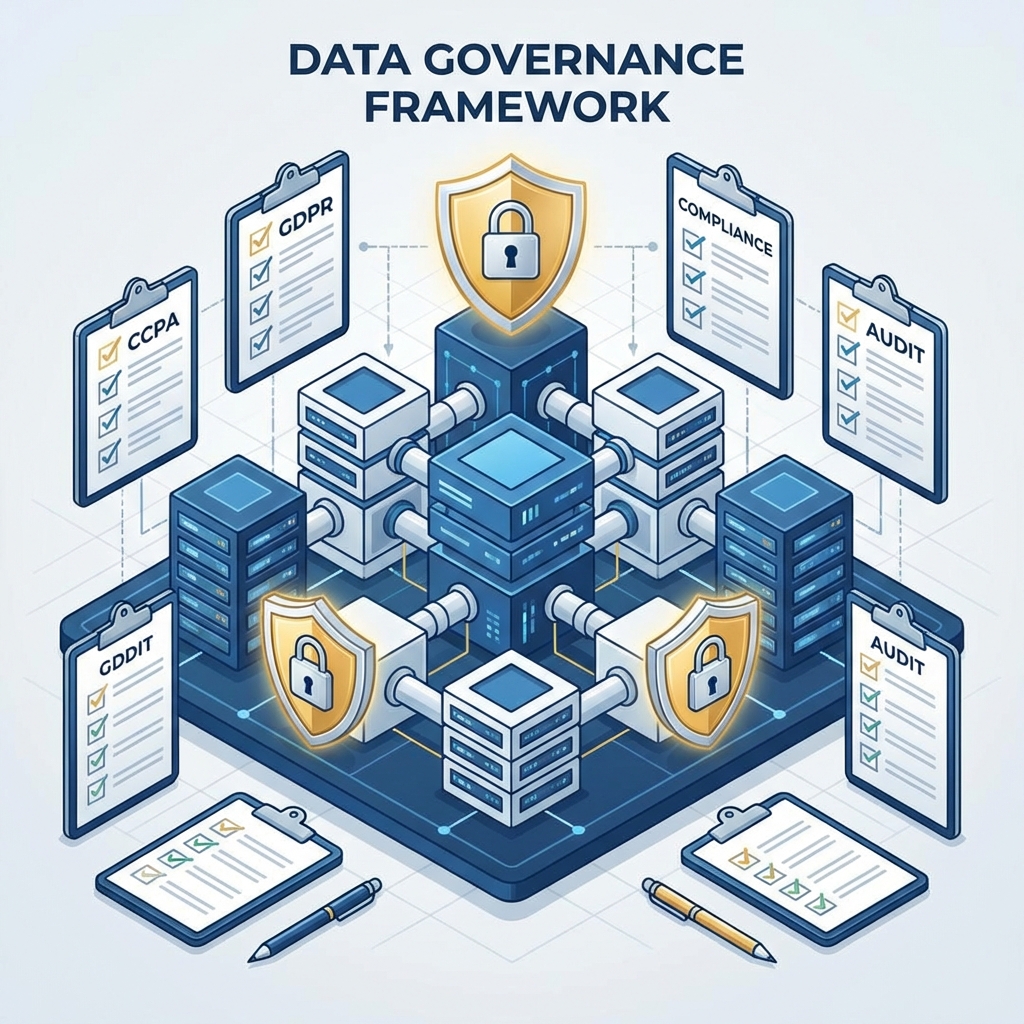
When data is extracted to CSVs, all governance is lost. Databricks sharing is deeply integrated with Unity Catalog. This means the data owner retains absolute, programmatic control. You can revoke access instantly, and every single SELECT query executed by a recipient is logged in your system tables (system.access.audit). This provides the strict oversight required for regulatory compliance without slowing down the business.
Conclusion
The data sharing capabilities in Databricks democratise access to information while simultaneously elevating security. By eliminating data silos, minimising duplication, and leveraging the open Delta Sharing standards, organisations can foster robust technical collaboration across the entire enterprise ecosystem.
Is your data stack slowing you down? The wrong architecture can cost thousands in wasted compute and engineering hours. Book a Data Architecture Assessment.